Market Volatility Puts Retirement Portfolio Risk Back in Focus
Retirement Planning Dale Roberts 475 reads
A sharp market drop highlights why retirees may weigh concentration risk, while long-term savers have more time to ride out downturns.

A sharp market decline can expose how much a retirement portfolio depends on a small group of fast growing companies. The recent selloff has put that risk back in view, especially for people already drawing income from their savings. For younger savers, the same drop may feel different: lower prices can help when they’re still adding money and have many years before they need it.

The market’s direction from here is uncertain. A correction could pause quickly, or losses could deepen. The practical question for households isn’t whether anyone can call the bottom. It’s whether their mix of shares, bonds and cash fits the time they have to invest and the withdrawals they expect to make.
What the selloff has looked like
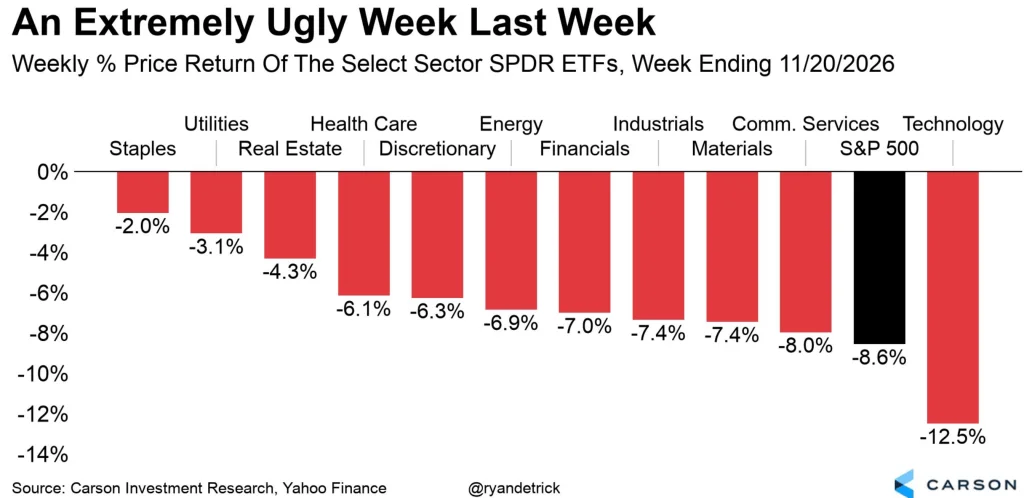
The week described in the market figures was rough for Canadian investors: Canadian stocks fell 8.0%, while developed international markets lost 7.1% in Canadian dollars. The decline was linked to concern about Nvidia and its chief executive, Jensen Huang, after allegations that chips may have been smuggled into China. That episode raised questions about whether enthusiasm for artificial intelligence had pushed some market prices too high.
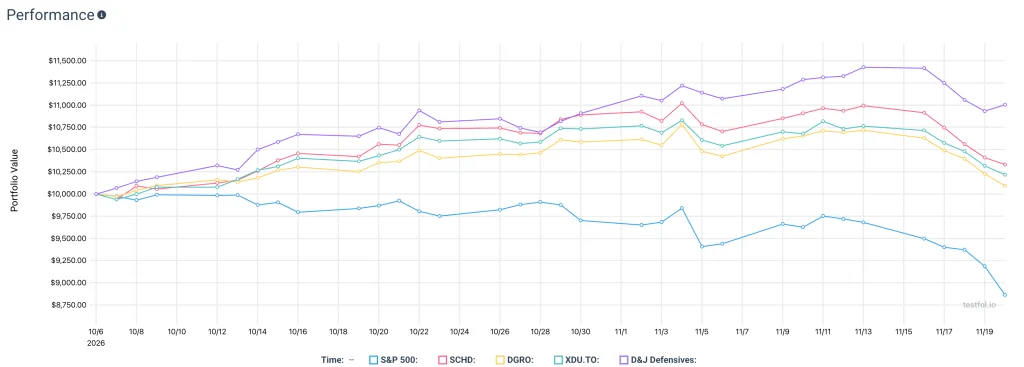
Those figures describe a single difficult week, not a forecast for what comes next. The correction had begun on October 6, and the selloff accelerated during the week in question. It’s possible that prices recover quickly; it’s also possible that markets fall further or spend a long stretch making little progress. No one can know in advance which path will unfold.
That uncertainty matters more to someone taking regular withdrawals than to someone who can leave their savings invested for decades. When a portfolio falls and its owner keeps withdrawing from it, fewer shares remain to benefit if prices later recover. That doesn’t make a downturn automatically disastrous, but it does make a retirement spending plan and cash reserves worth reviewing.
Concentration risk and defensive holdings
One way to limit reliance on a narrow group of U.S. technology companies is to spread investments across more types of assets. The approaches described include holding less of the U.S. market, adding defensive or lower volatility shares, and combining stocks with bonds and cash. Each choice has trade-offs: a portfolio that falls less during one decline may also lag when the market’s strongest gains come from the companies it holds in smaller amounts.

The examples in the figures point to that possible cushioning effect. A personal basket of U.S. defensive stocks and quality and value holdings reportedly held up better during the period starting October 6. In Canada, BMO’s low volatility ZLB-T was up 5.1% from that date. Those results relate to a specific stretch of market activity. They don’t show that defensive shares will always rise when the broader market falls, or that the same pattern will repeat.

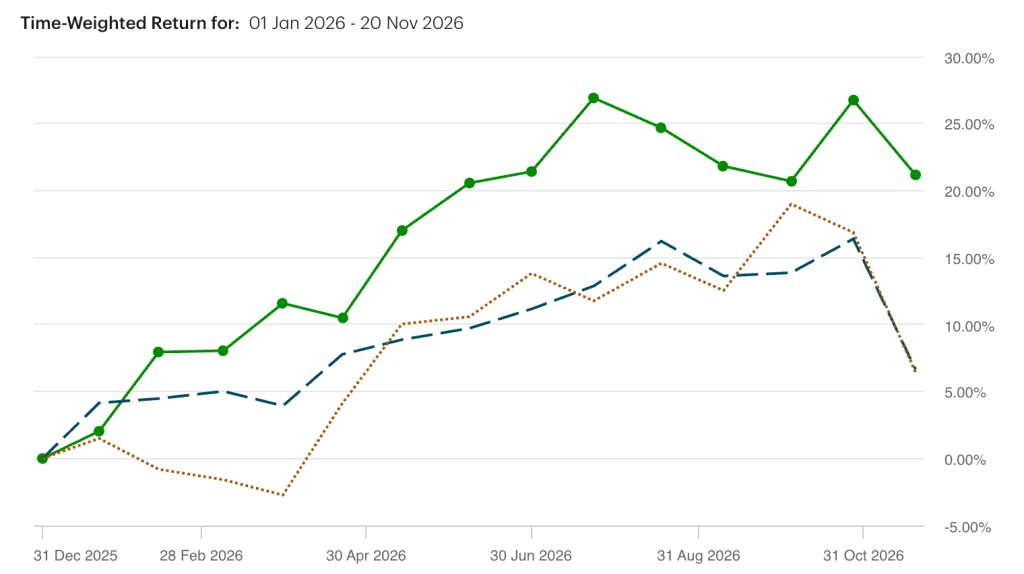
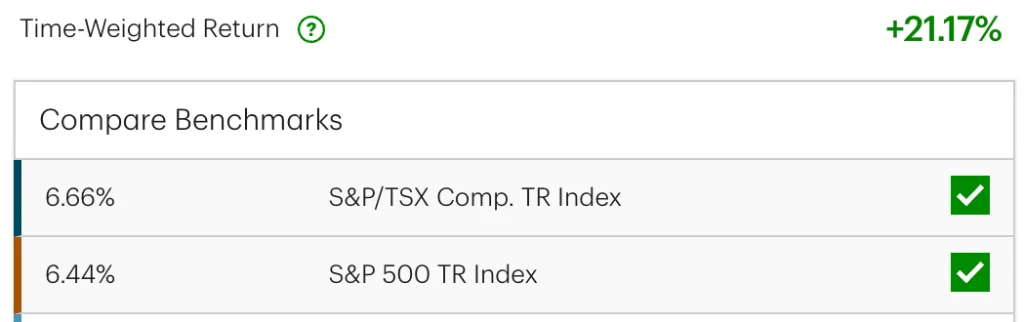
A Canadian blue chip defensive portfolio also showed a smaller decline over the latest month in the account described: it was down 3.8%, compared with a 7.9% drop for the TSX. That’s a meaningful difference for that period, but not a guarantee of protection. Defensive stocks remain stocks, and their prices can fall. Investors can also face the risk that a strategy that recently softened losses won’t keep doing so in a different market.
Retirees and long-term savers face different trade-offs
People who have recently retired may have less flexibility to wait through a long recovery, particularly if they rely on portfolio withdrawals to cover regular spending. High valuations can also leave markets with less room for future gains, though valuation alone can’t tell anyone when a decline will start or end. A mix that includes bonds and cash can give a household other sources of funds, while a broader spread of shares can reduce dependence on one market segment. Neither approach removes risk.
Someone still building savings and expecting to invest for another decade or more may be better able to sit through a downturn. If they continue making contributions while prices are lower, the same amount of money can buy more shares. That can help over a long period, but it doesn’t guarantee a profit or mean every saver should welcome a market drop. Near term needs, job security, debt and comfort with losses all affect how much risk a household can carry.
A useful review starts with the purpose and timing of the money. Savings needed soon have a different job from money intended to support spending many years from now. Check whether a fall in share prices would force you to sell at an uncomfortable time, and whether your current holdings depend heavily on one country, industry or group of companies. These are general planning questions, not a promise that any particular mix will perform well.
Make the spending plan part of the review
For retirees, a cash flow plan can connect day-to-day spending with portfolio risk. Laying out expected income, withdrawals and expenses can show how much flexibility there is if markets remain weak. It can also help identify whether cash or bond holdings are intended to cover near-term needs, and whether spending may need to change under less favorable conditions.
The key is to understand the plan’s assumptions. A calculator can organize the numbers, but its results depend on inputs such as spending, income and investment returns. A plan is most useful when a household revisits it as circumstances change, rather than treating one projection as a promise.
Market drops are unsettling, but they can also reveal whether a portfolio was built around assumptions that no longer feel comfortable. Retirees can examine withdrawal needs and concentration; long-term savers can check whether they have the time and temperament to stay invested. A clear plan won’t predict the next move, but it can make the next decision less reactive.