Turning 65 in Canada: RRIF Withdrawals, Tax Credits and CPP and OAS Timing
Retirement Planning Dale Roberts 341 reads
A RRIF can provide regular income and pension tax credits at 65. Weigh withdrawal rules and fees alongside CPP and OAS timing in a retirement cash flow plan.
Turning 65 can change how retirement income is taxed and paid out. For a Canadian saver with money in an RRSP and no employer pension, converting some savings to a RRIF may create access to a pension income credit, remove RRSP withdrawal fees and provide regular payments. Those benefits need to be weighed against taxable income and required withdrawals.
One retiree approaching 65 expects roughly $20,000 a year from CPP and OAS, alongside self-employment income and RRIF withdrawals. The plan is to begin OAS next year and open a RRIF. The decision is based on a cash flow projection that includes an estimate of how long the household may live, rather than on age alone.
Test benefit timing against the household plan
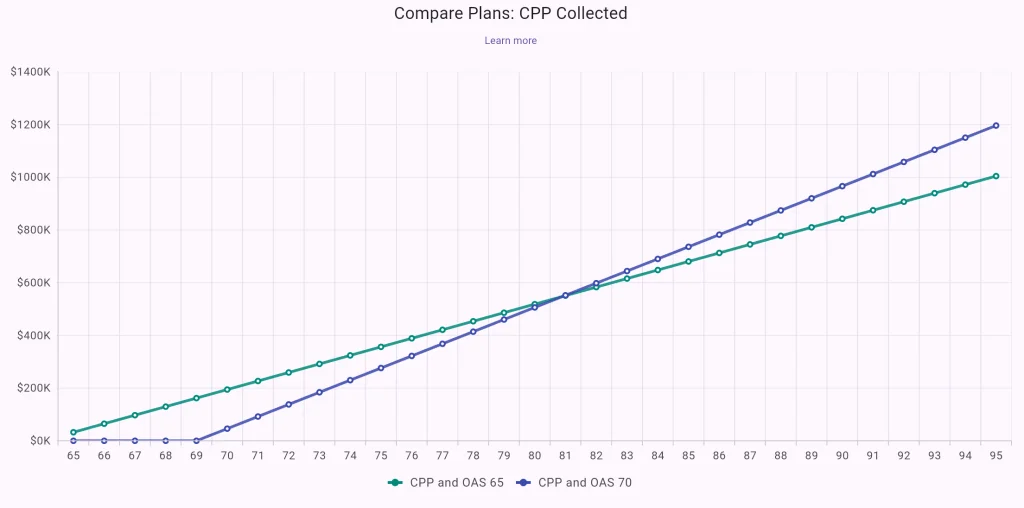
CPP and OAS can generally be delayed from age 65 to age 70. The source describes a 42% increase for CPP and a 36% increase for OAS when both are delayed to 70. For couples, the effect can be larger at the household level when both partners qualify for benefits.
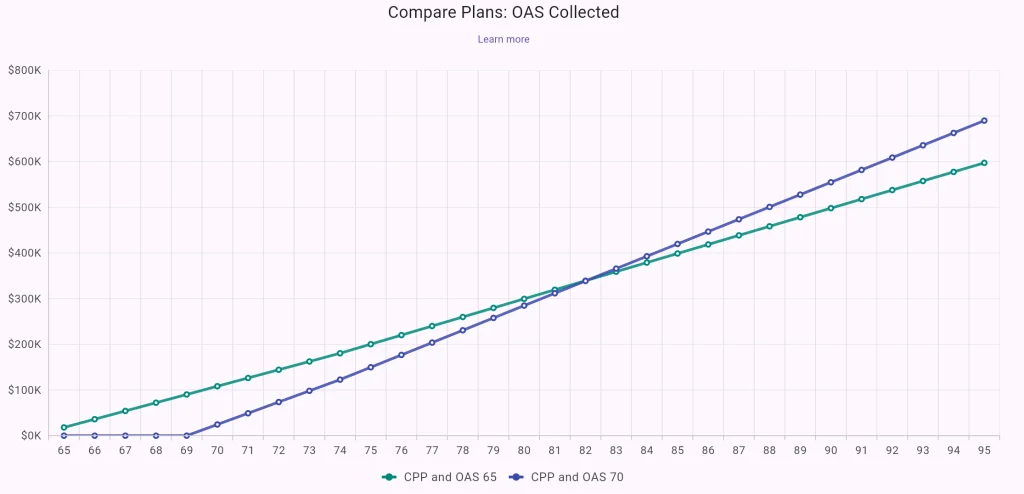
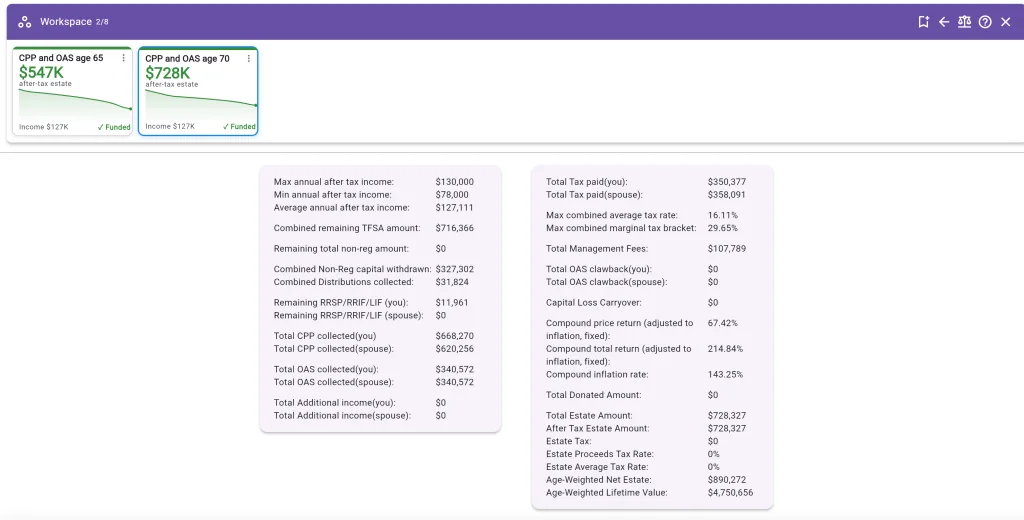
A MayRetire calculator comparison for a couple with generous CPP and full OAS projected outcomes through age 95. In that example, delaying both benefits produced an estimated final estate $181,000 higher than the plan that started them at 65. Total benefits were projected at $1,969,000 with delayed payments, compared with $1,672,000 when benefits began at 65 — a $297,000 difference.
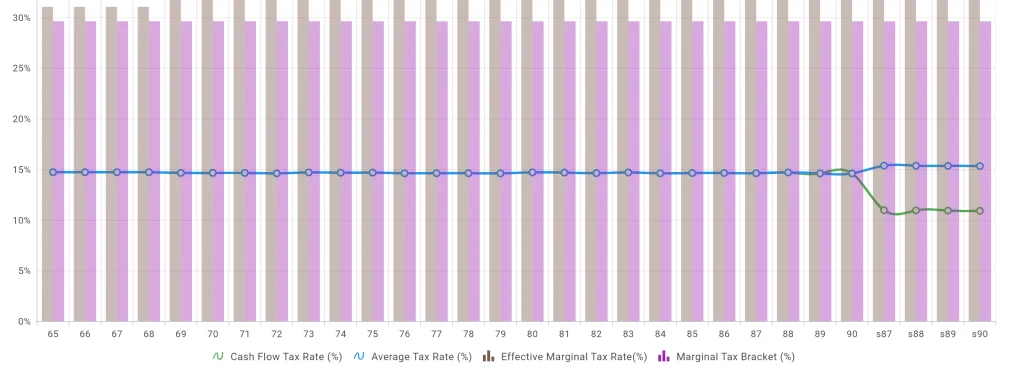
Those figures belong to that particular plan. The result for another household will depend on its income, spending, savings, lifespan assumptions and other retirement resources. A cash flow projection can help show how benefit timing interacts with withdrawals from registered accounts, workplace pensions and other income. It can also reveal the point at which one timing choice may catch up with another.

The retiree’s own CPP and OAS decisions are guided by a household cash flow plan. The practical question is how each timing choice fits with the expected years of spending and other sources of income, rather than which option looks larger in isolation. A planner who charges for advice by the hour or project is another possible source of help; some households may prefer to build and update their own plan.

What a RRIF changes at 65
Moving money from an RRSP into a RRIF can make withdrawals more convenient, but it doesn’t make them tax-free. RRIF withdrawals up to the required minimum generally aren’t subject to withholding at the time of payment. The amount still counts as income, and any tax owing is settled when filing a return.

The minimum withdrawal is based on the account value and a percentage linked to the age used for the calculation. The schedule shown for ages 60 to 69 is:
| Age | Annual minimum withdrawal |
|---|---|
| 60 | 3.33% |
| 61 | 3.45% |
| 62 | 3.57% |
| 63 | 3.70% |
| 64 | 3.85% |
| 65 | 4.00% |
| 66 | 4.17% |
| 67 | 4.35% |
| 68 | 4.55% |
| 69 | 4.76% |
The schedule also allows a spouse’s age to be used for the calculation. The retiree’s example notes that RRSP withdrawals at their brokerage cost $25 per transaction, a fee they expect to avoid by withdrawing from a RRIF instead. Fees vary by provider, so check the account terms before making a change.

At age 65, eligible pension income may qualify for the federal Pension Income Amount, described here as a $2,000 credit that could reduce federal tax by up to $280. Provincial tax credits may also apply. The retiree also expects an age credit of $9,448 next year and notes that the full credit applies for the year even if someone turns 65 late in that year. The amounts and eligibility rules can depend on the tax year and personal circumstances, so confirm current details when planning.
Turn the minimum into a monthly payment
A RRIF can provide a steady payment schedule. In the example, a $375,000 RRIF at age 65 would produce a $15,000 minimum annual withdrawal at 4%:
$375,000 × 4% = $15,000 a year
That works out to $1,250 per month. The required minimum percentage rises with age, so payments based on the minimum will increase over time if the account value and calculation assumptions support it. That can be useful when income needs rise, but it may also push taxable income above current spending needs.
The retiree expects that any excess income could be directed toward a spouse’s RRSP, if eligible, or a TFSA where contribution room is available. This approach depends on the household’s income, available room and tax situation. Comparing current tax rates with projected retirement rates can help frame the trade-off, though it doesn’t remove the need to account for future withdrawals and taxes.
The main planning task is to coordinate the pieces: CPP and OAS start dates, RRIF minimums, other income, spending and tax credits. A projection can make the timing and cash flow easier to see; account fees and tax treatment then determine whether a particular RRIF setup fits the household.