A Canadian Retirement Cash Flow Plan That Balances Spending, Taxes and Benefits
Retirement Planning Dale Roberts 782 reads
A sample plan uses early retirement withdrawals, TFSA contributions and delayed benefits to manage income over time, with trade-offs and market risks to consider.

Retirement income planning is a timing problem as much as a spending problem. A Canadian retiree with substantial savings can draw from different accounts, delay benefits and adjust spending across retirement to shape taxable income. A sample plan for Herman, a single 60-year-old who recently retired, shows how those choices might fit together—and why projections need to account for uncertain returns.

Start with the accounts and the goal
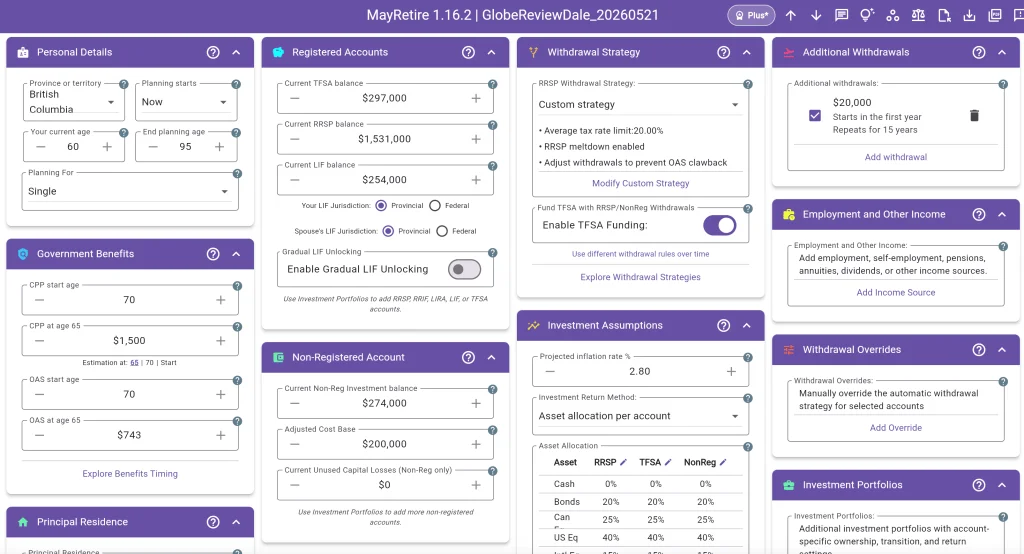
Herman has a net worth of $3,036,000: a mortgage-free home worth $500,000, $180,000 in bank accounts, $274,000 in non-registered mutual funds, $297,000 in a tax-free savings account (TFSA), $1,531,000 in a registered retirement savings plan (RRSP), and $254,000 in cash held in a registered retirement income fund (RRIF). His RRSP and RRIF make up about 70 per cent of his investable assets.

He wants to make the most of his retirement income, keep taxes down and limit the Old Age Security (OAS) recovery tax that could apply at age 70. He hasn't set a specific spending target and says he doesn't expect to leave much behind. He plans to delay Canada Pension Plan (CPP) and OAS benefits until age 70.
That combination points to two planning questions: how much to withdraw from registered accounts before benefits begin, and how much of his savings he actually wants to spend. A plan built around the minimum needed for monthly expenses could leave a large balance later, especially when the retiree has already said a large estate isn't the priority.
Use registered withdrawals to manage taxable income
Financial planner Ian Calvert's suggested starting point is a $75,000 annual RRIF withdrawal during the first phase of retirement. The withdrawal is taxable income. Herman would also report interest, dividends and capital gains from his non-registered holdings, estimated at $17,000 a year. That puts projected taxable income at about $92,000.
In the planner's estimate, keeping annual income below $100,000 would mean a combined British Columbia and federal marginal tax rate of 28.2 per cent and an average tax rate of 15.5 per cent. The gap below $100,000 also leaves some room for capital gains if Herman sells investments in a given year. These figures belong to this scenario; an individual's tax bill depends on their income, location and circumstances.
RRSP and RRIF balances both grow tax-deferred, but they work differently for withdrawals. The RRIF provides a structure for recurring income, while keeping assets in the RRSP gives Herman more control over when to move money into the RRIF. The suggested approach is to transfer smaller amounts over time and draw regular spending money from the RRIF. That flexibility lasts until age 71, when the remaining RRSP must be converted to a RRIF and minimum withdrawals will apply the following year.
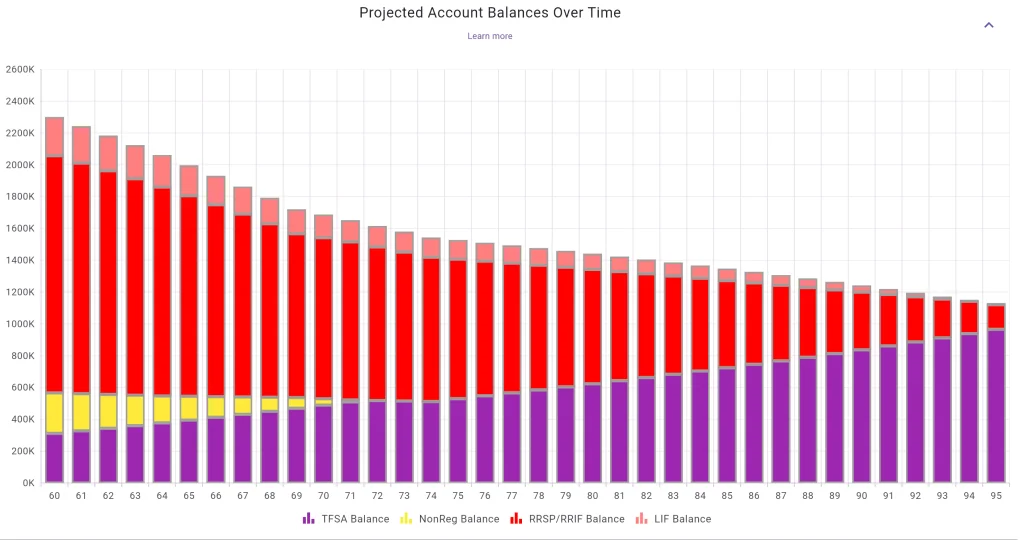
At a $75,000 withdrawal and an assumed annualized return of 5 per cent, the planner estimates Herman's RRIF could hold its value until age 72, when the full minimum withdrawals begin. The early withdrawals are intended to use some registered savings while Herman is in a comparatively lower tax bracket, reducing the chance that larger mandatory withdrawals will stack on top of later CPP and OAS income.
Match the plan to actual spending
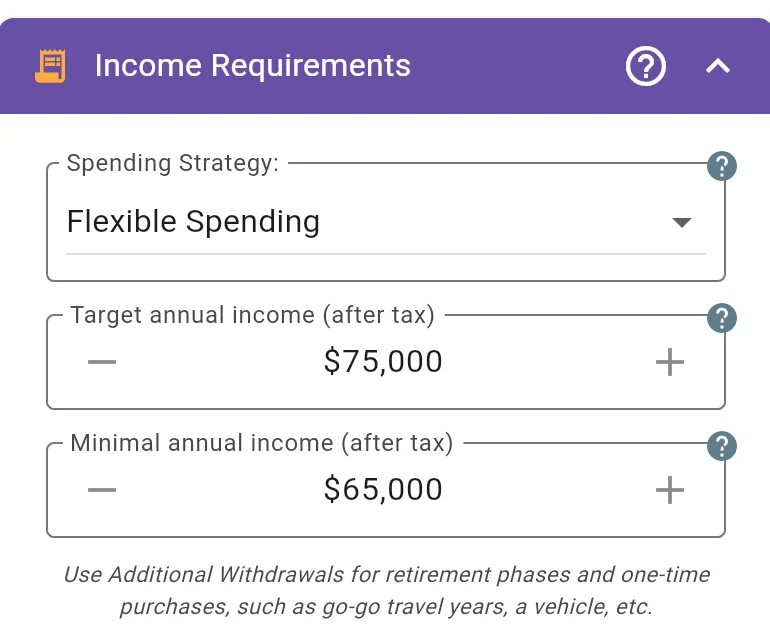
After tax, the $75,000 RRIF withdrawal would provide about $60,500 a year, or a little over $5,000 a month. That is expected to cover Herman's stated lifestyle needs of $5,000 a month after tax. The recommendation also has him move $7,000 each year from non-registered assets into his TFSA.
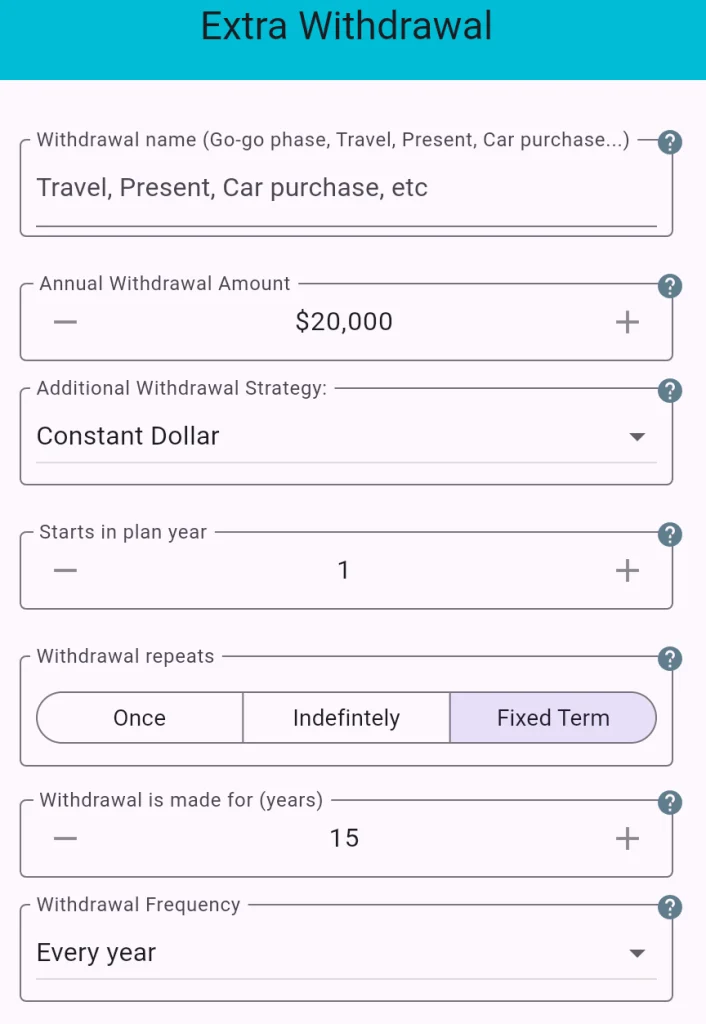
But the numbers suggest he could spend more. The planner estimates that Herman could draw another $20,000 a year from income generated by his non-registered portfolio. He'll report that investment income whether he spends it or leaves it invested, so additional spending may better match his stated goal of using more of his wealth during retirement.
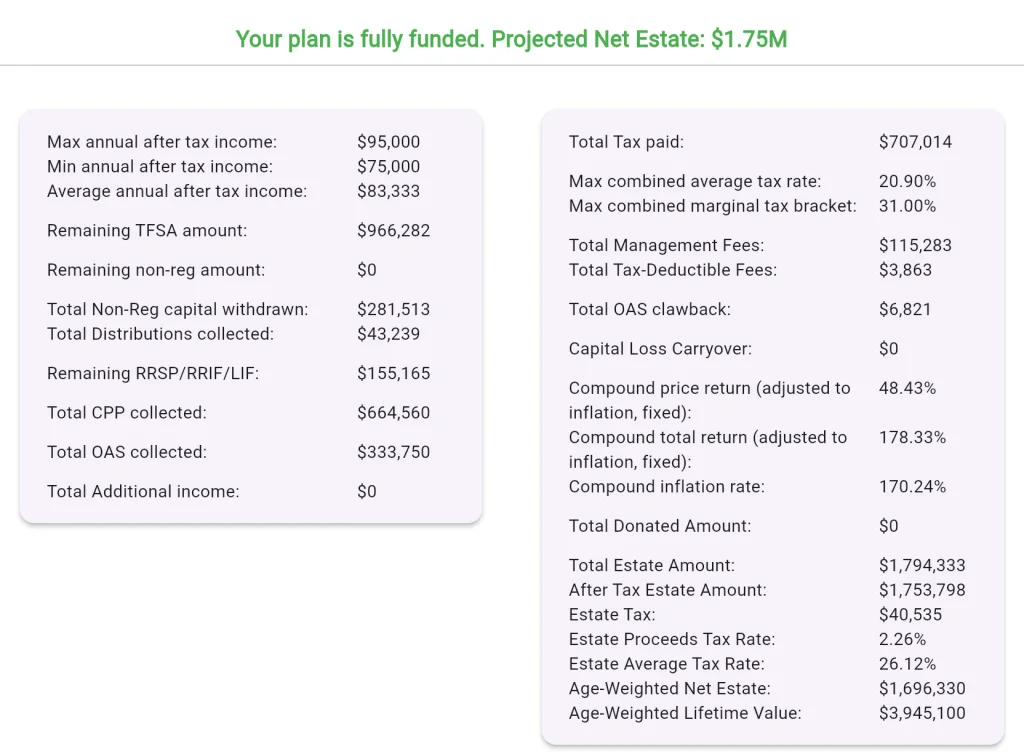
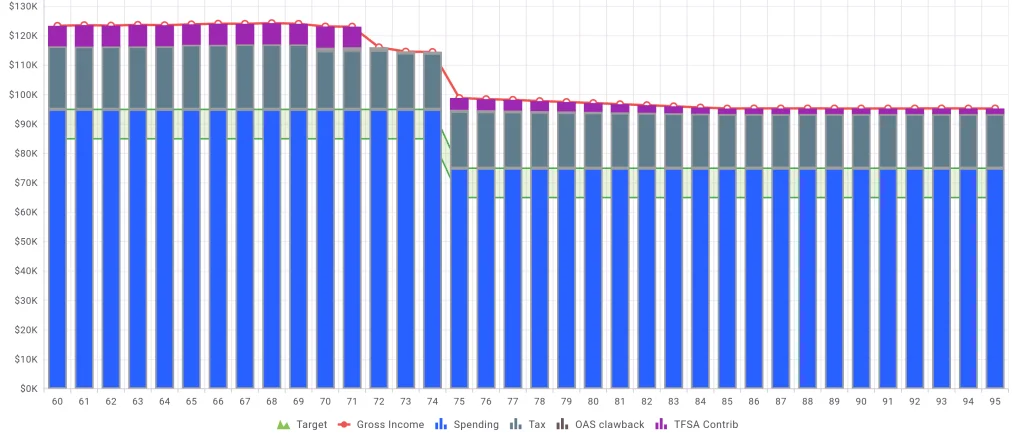
A separate cash flow projection takes this further. It starts with $75,000 of after-tax income and adds $20,000 a year for the first 15 years, creating a projected $95,000 annual after-tax budget during that period. The plan then returns to the $75,000 base. This higher-spending phase reflects a common way to think about retirement: spending may be greater in the early years, ease during less active years, and rise again if health or personal care needs become more expensive.
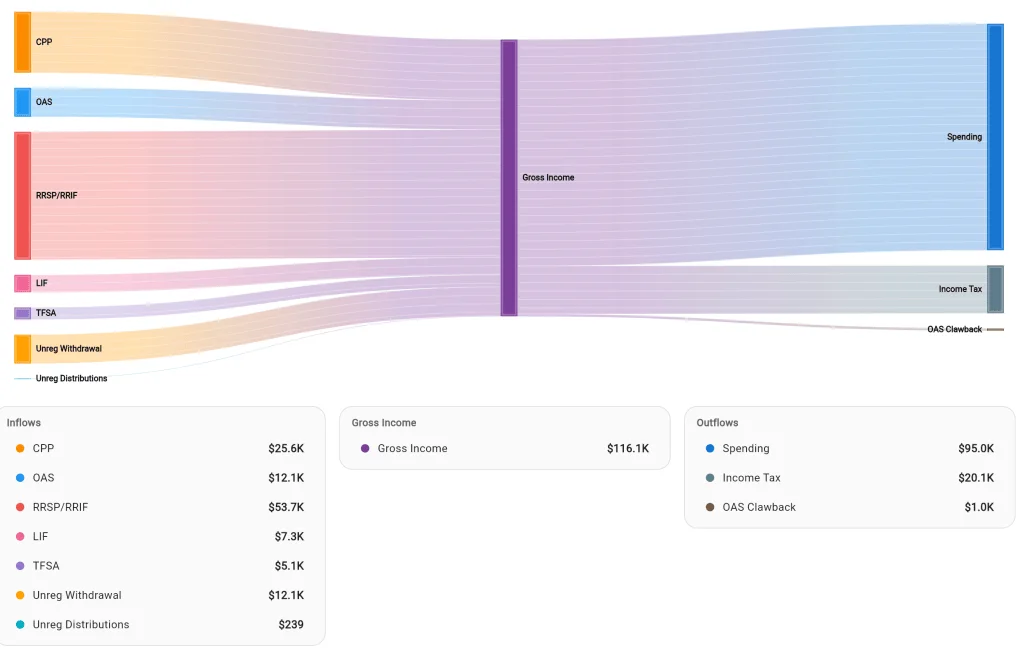
MayRetire lets users enter government benefits, registered and taxable accounts, pensions when applicable, inflation and spending needs. The projection described here leaves out Herman's $180,000 in bank accounts, which may have been set aside for a future purchase. It also uses a modest RRSP withdrawal strategy to help bridge the period before CPP and OAS begin.
Plan for the benefit years and tax changes
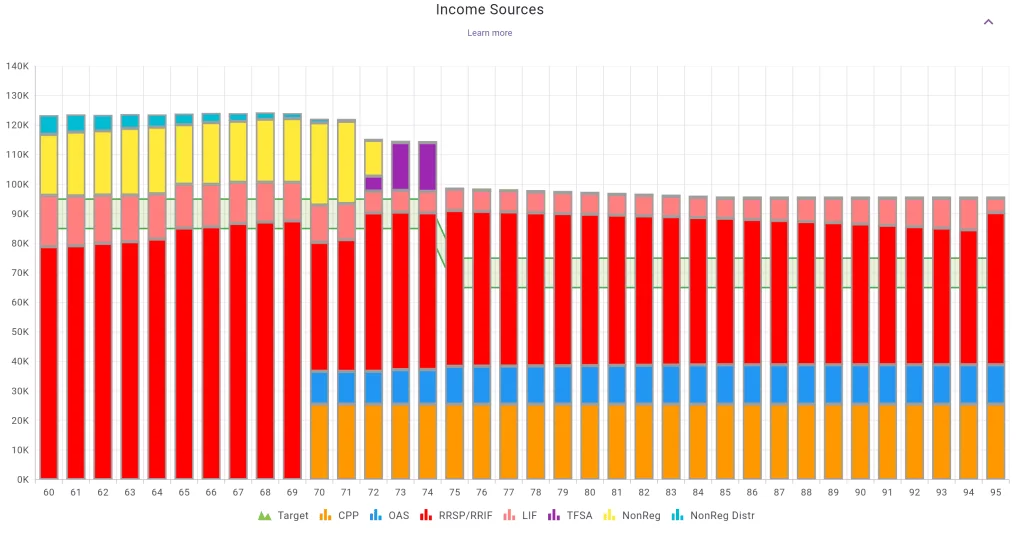
Herman's portfolio is projected to fund the gap from retirement through age 70, allowing him to defer CPP and OAS without relying on an unsustainable withdrawal rate. Once RRIF minimums begin in 2038, the planner estimates total withdrawals will rise to about $100,000 a year. At age 72, with full RRIF minimums and enhanced CPP and OAS benefits, gross income is projected at about $145,000.
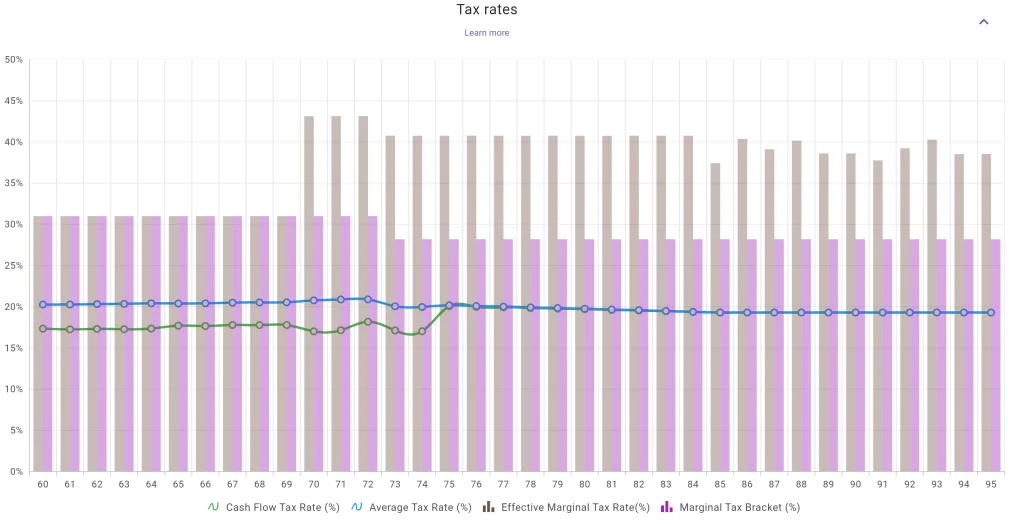
That later income could raise Herman's marginal tax rate to 38.29 per cent, and roughly one-third of his OAS could be recovered through the OAS recovery tax, commonly called the clawback. The plan's purpose is not to eliminate tax or avoid every recovery. It aims to spread taxable income more evenly across retirement and limit the overlap between larger RRIF withdrawals and benefit income.

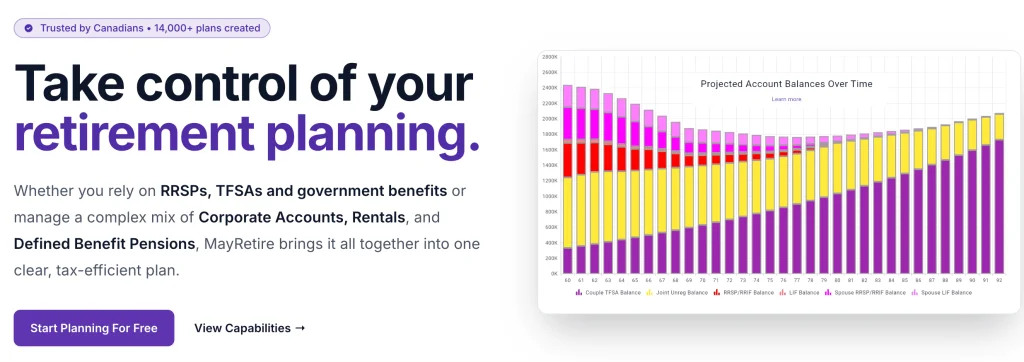
The cash flow charts show registered and taxable accounts doing most of the work during the first decade. In the projection, the taxable account is depleted by age 73, while RRSP and life income fund (LIF) withdrawals later provide a smaller share. CPP and OAS then form a larger, steadier income base. The account balances and tax rate are projected to shift over time as those sources change.
Read projections as scenarios, not promises
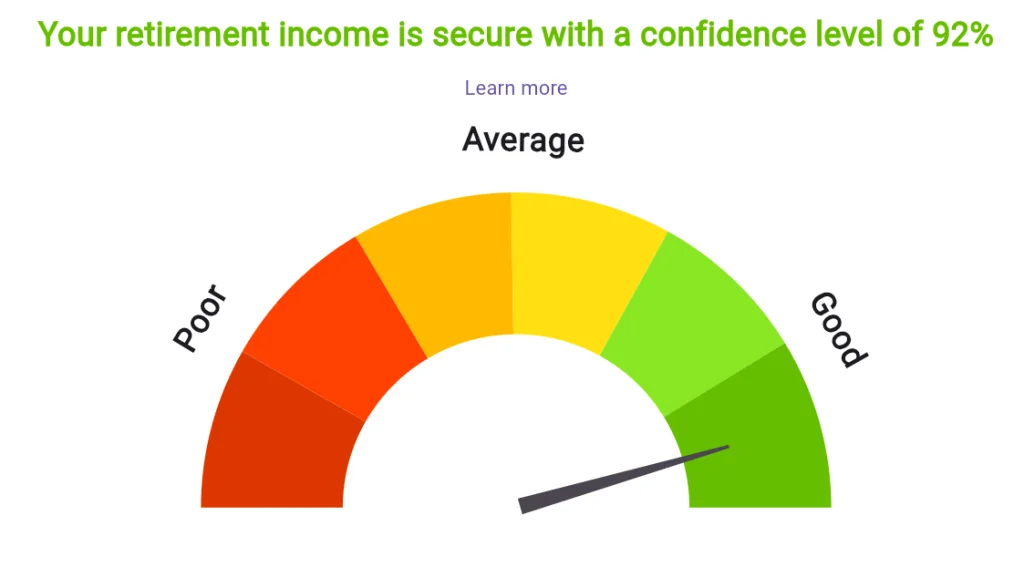
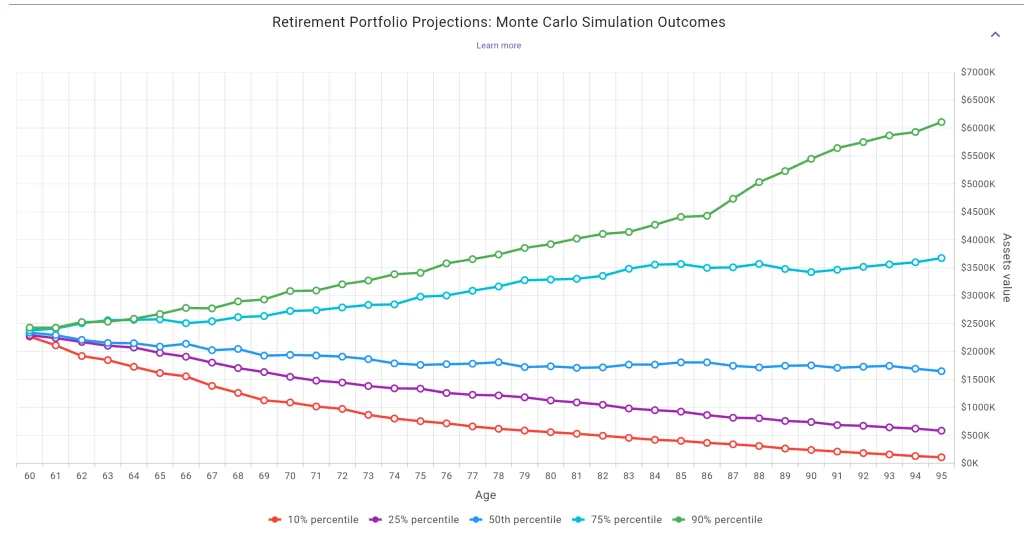
The plan uses linear returns, meaning it assumes a steady return based on the chosen asset allocation. Actual investment returns fluctuate, so the order of gains and losses can change how long a portfolio supports withdrawals. A separate Monte Carlo analysis runs 500 simulated return paths and reports a 92 per cent success rate for this plan. That result describes the model's assumptions and definition of success; it can't guarantee that Herman's savings will last.
Stress tests can help show how a plan responds to different conditions, but their value depends on the assumptions entered. Spending needs, inflation, investment mix, fees and the timing of market declines all matter. It's useful to revisit a projection as circumstances change, especially when a plan relies on a particular withdrawal level or on delayed benefits.
Herman's projected net worth continues to grow under his current spending pattern. If leaving only a small estate remains his goal, he could consider higher spending or gifts to family while he's alive, after weighing his own future needs. The practical takeaway is to set a spending target first, then use account withdrawals and benefit timing to build a plan around it. A clear cash flow projection makes the trade-offs visible; regular reviews keep the plan connected to real life.