Affordable Food Storage Trays That Help Organize Jars, Cans and Pantry Staples
Budgeting & Saving Anita 740 reads
A household pantry gets a practical storage upgrade with washable baskets sized for canning jars and canned food, plus clear bins for everyday staples.
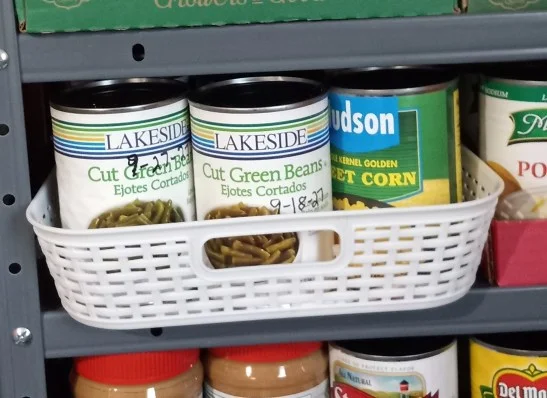
Reusable plastic baskets can make pantry storage easier to clean, move and organize. In one household, a basket already on hand turned out to fit canning jars and metal cans closely enough to replace several cardboard boxes and trays. It holds fewer pint jars than the old boxes, but the count matches the capacity of the canner, making the swap useful at canning time.

The change also offers a practical way to keep food storage off cardboard. The baskets can be washed, and carrying a group of jars together cuts down on handling individual containers. They aren’t a perfect fit for every shelf or storage setup, but they show why checking around the house can be a good first step before buying new organizers.
Protecting pantry food from mice
A mouse problem can make ordinary pantry storage feel inadequate. After a neighborhood grocery store closed with food left inside, mice spread into nearby homes, where open trash cans and bags offered other places to find food. At one home in the area, keeping pantry supplies protected and cleaning surfaces became a daily concern. The resident believes exposure to dried mouse droppings and urine may have contributed to health problems, and moving away eventually brought relief.
That experience makes a new mouse problem at home especially upsetting. Containers with secure lids and smooth sides may help protect stored food, although no container should be treated as a guarantee against determined mice. Check for signs of chewing or access, and keep food in containers that close firmly.
For ingredients used regularly, clear Rubbermaid containers sit on the pantry’s upper shelves. They hold staples such as grains, beans, pasta and flour. The household shops its pantry before preparing meals, so these are the supplies currently in use. Buying the containers one or two at a time over several years spread out the cost.

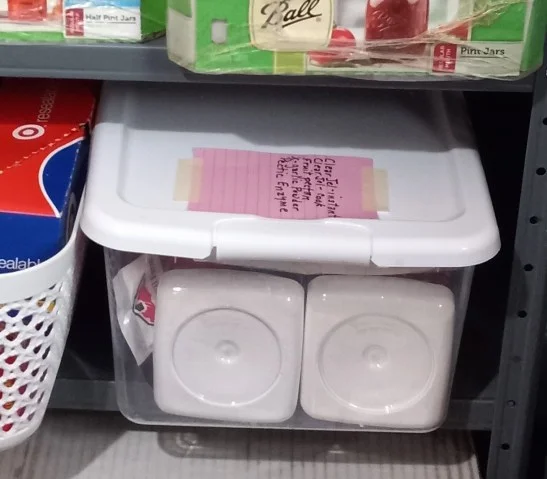
Extra supplies for restocking go in lidded plastic bins. Their smooth sides and close-fitting tops seem helpful for keeping mice out, though the resident remains cautious about assuming the bins are mouseproof. Clear plastic makes it easier to see what’s inside, and moving one bin to clean the floor is simpler than shifting several separate items.
The bins cost $3 when first purchased; the last checked price was $6. They may also work for quilt batting, which the resident wants to store safely because mice can use soft materials for nesting. Prices and availability can change, so check the current cost before planning a purchase.
A basket that fits canning jars
Cardboard boxes had been holding the canning jars, while cardboard trays held canned food. The household wanted a replacement that could be washed and sanitized regularly, fit the available space, and cost little enough to suit a limited budget. Plastic options found online didn’t meet those needs, so the search paused.
The solution was a white plastic basket already in the home, originally used to hold molasses jars. It fit pint jars with one trade-off: the basket holds 10, compared with 12 in the cardboard box. That smaller capacity happens to match the canner, which processes 10 pint jars at a time. The basket can therefore carry a full batch without leaving extra jars behind.

For half-pint jars, the same basket holds 14, also matching the canner’s capacity. Empty jars can be stored in the basket where the filled jars will later sit. When it’s time to can, the whole load can be carried to the kitchen. The basket can be washed while the jars are being prepared, making it easier to clean the storage container as part of the same routine.

The basket also holds 12 metal cans, the same number as the cardboard store trays it replaces. Used on a shelf, the trays function somewhat like pull-out food drawers: a group of cans can be brought forward together, making items easier to reach. Larger white baskets already serve a similar purpose in lower kitchen cabinets. Red baskets are in the fridge, with white ones under consideration as replacements.

Cost, availability and planning
Finding more baskets may be harder than choosing where to use them. Two nearby Dollar Tree stores had none in stock when checked. A quick estimate shows the scale of the project: three shelf units, each with seven shelves, holding three containers per shelf would require 63 baskets. That’s a substantial number to locate one at a time.
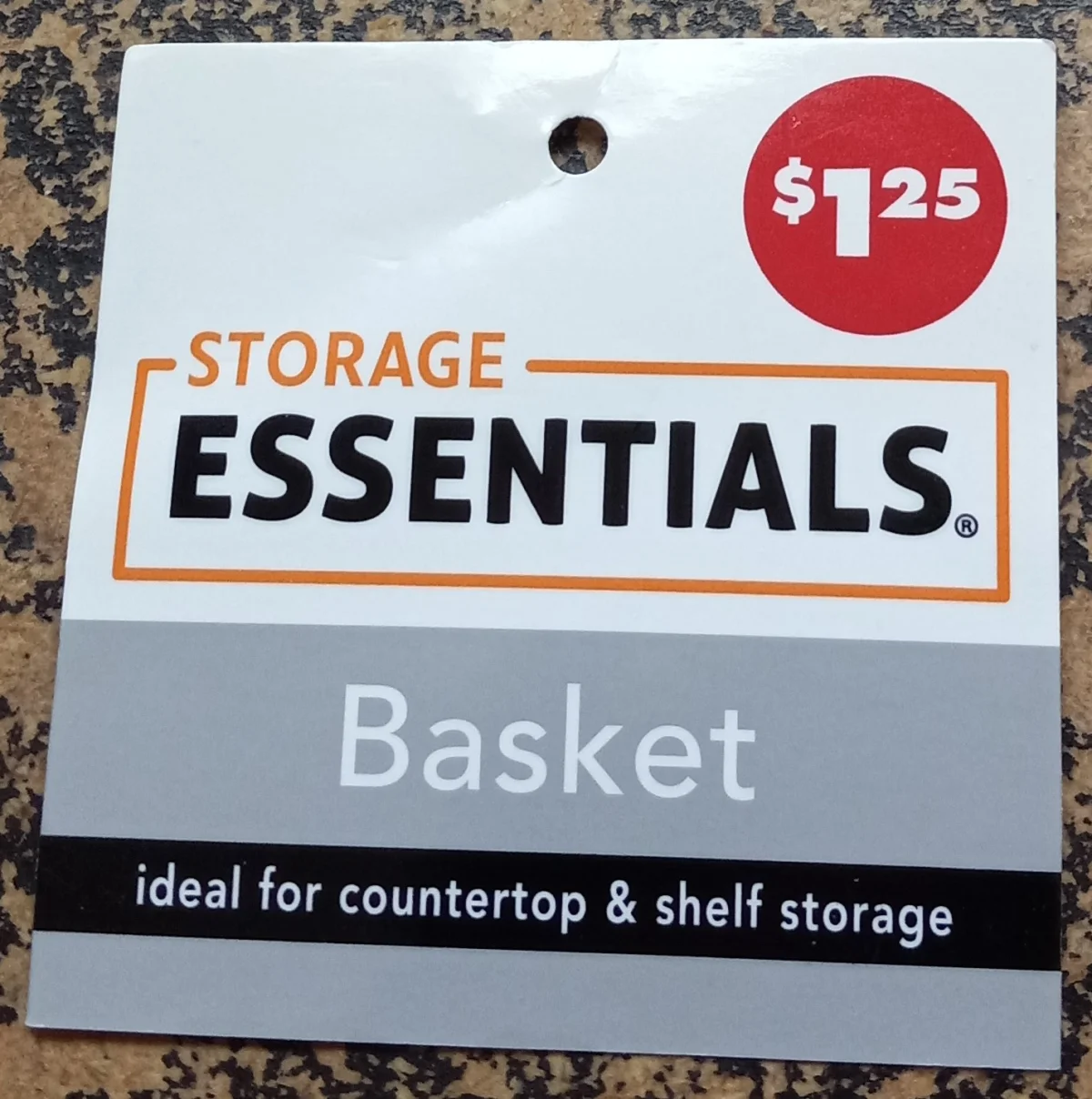
The online option listed baskets in assorted colors, sold in sets of 24 for $36, plus $2.16 in Kentucky sales tax and shipping. Specific colors weren’t available to select. The buyer had also seen reports of ordering problems and no refunds, and preferred to wait for store restocking instead. At the time of purchase, the baskets cost $1.25 each; the online listing showed $1.50 each.
The listed product is called a Storage Essentials Basket. If you’re considering one, compare its dimensions with your shelves, jars and cans before buying. A basket that holds fewer containers than cardboard may still be a good fit when its capacity matches your canning batch or makes everyday cleaning simpler. Starting with one basket can show whether the size works before you look for more.