Store-Brand Batteries, Yard-Sale Finds and an Early Start on Gifts
Budgeting & Saving Belinda 367 reads
A $3.77 battery pack, a $3 yard-sale desk and a $4 thrift-store clock show how small swaps add up. Here's what one frugal week looked like.

Small household savings rarely make headlines, but a single ordinary week can show how a budget gets stretched in practice. One home-based budgeter's recent week covers a battery swap that cut the price by more than half, a yard-sale desk bought for $3, a $4 clock from a thrift store and an early start on holiday gifts. None of it is dramatic. That's the point.


Upkeep that costs nothing but time
Much of the week went to maintenance. Leaves were raked on several days to keep wet, slippery leaves off walking paths, and the steps got brushed each time someone went up or down. It's unglamorous work, but it prevents the kind of fall that turns into a much bigger expense.
A broken bulb in the dining room fixture was handled in-house too. The power went off, a stepladder and needle-nose pliers took care of the old bulb, the glass was vacuumed up and the new bulb went in. Doing a simple repair yourself usually avoids a service call fee, though it helps to know your own limits before climbing a ladder.
Moving the china cabinet turned up dozens of missing cat toys, which is a reminder that a sweep behind furniture can recover things you already own. Gathering unused items for a consignment sale is a similar move. The household's spare stuff gets a second life, and the money from it can go toward the next need.
Batteries: the math behind a switch
This is the part of the week worth a closer look. Battery prices have climbed, and the figures in this household's shopping trip at Walmart show how much the brand choice matters. An eight-pack of double AA Energizer batteries was $7.94, the eight-pack of Rayovac was $6.97, and the eight-pack of Great Value double AA batteries was $3.77.
Here's how those numbers break down:

- Energizer: $7.94 for eight, or about $0.99 per battery
- Rayovac: $6.97 for eight, or about $0.87 per battery
- Great Value: $3.77 for eight, or about $0.47 per battery
Switching from the Energizer pack to the store brand saves $4.17 on each eight-pack, roughly 52 percent. Even against the Rayovac price, the store brand saves $3.20. Those are real savings on a purchase that repeats every few months.
The trade-off is performance. This household usually buys name brands because of their longer life, and the store brand was chosen for clocks, which are low-drain devices where a battery can last a long time either way. That's the logic worth borrowing. Cheap batteries make the most sense in low-drain gadgets like clocks and remotes. For high-drain items such as cameras or toys with motors, a longer-lasting brand may cost less per hour of use even at a higher sticker price. The honest test is to track how long each battery runs in the same device.
Secondhand finds and an early start on Christmas
The thrift store trip was a small but useful reminder. A couple of gifts turned up brand new and still in their original packaging, which is common enough in secondhand shops that it's worth checking before paying full retail. The advice is simple: look at the secondhand market first when buying gifts, especially for items that are easy to find used.
The other habit that pays off is gathering purchases early. Putting every gift bought so far into one bin does two things. It keeps the stash in one place so nothing gets lost, and it makes duplicate purchases easier to spot. A quick list taped to the bin, with who each gift is for and what it cost, can turn a loose pile into a clear holiday budget.
Secondhand shopping has its own risks, though. Thrift and resale purchases often come without a return policy, so it's smart to inspect items for damage, missing parts and function before you pay. Gifts still in the box are the easiest to vet. Used electronics and toys need a closer look.
Free and nearly free for the home
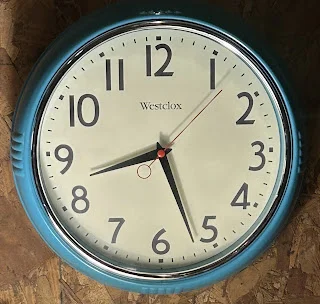
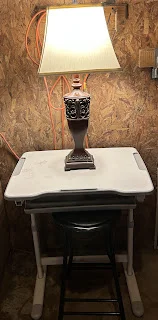
Two lamps came from a free yard sale. One went to the shop downstairs, where extra light was needed. A desk was picked up a few weeks earlier for $3.00. Together with a $4 clock from Goodwill, the week's three home purchases total $7.00 before any cleaning or small repairs.


The clock is a good example of a slow, steady approach. Several clocks in the house had stopped working over time, and they're being replaced one at a time as affordable working ones turn up. Buying as needed, rather than all at once, keeps spending spread out and lets you pass on anything overpriced.
Keeping the momentum
Walking over 10,000 steps a day costs nothing, and this week's playlist was a reminder that a favorite song can make a routine easier to keep. Physical therapy is a personal health matter and an expense that depends on individual circumstances, so it's best discussed with a care provider rather than measured against a budget here.
My read on this week is that the savings came from attention rather than big decisions. Checking unit prices, buying the store brand for the right job, scanning yard sales and thrift shops, and keeping gifts in one place each take a few minutes. Together, they add up to a household running a little more smoothly and spending a little less.
Try one of these habits this week. Compare the unit price on a staple you buy often. Check the secondhand option before buying something new. Then, like this household, follow up on the results. Battery runtime is the next thing to watch.